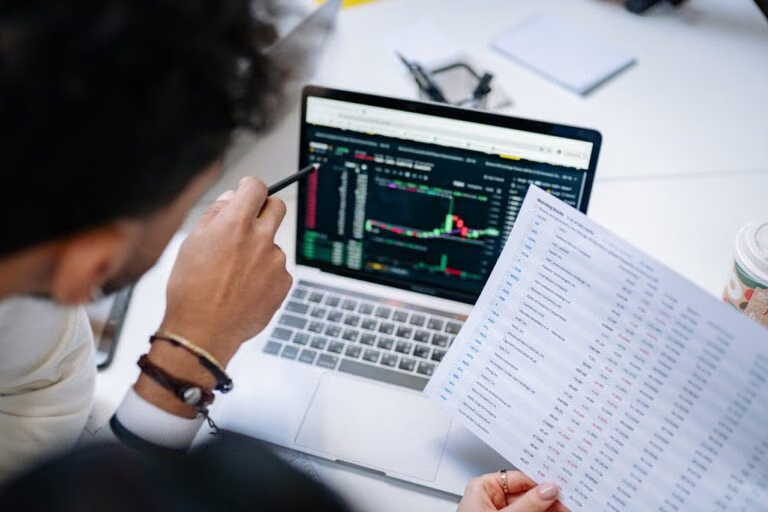
HOW TO MONITOR YOUR TRADES (THE RIGHT WAY)
Checking your P&L isn't monitoring. Real monitoring reveals patterns, catches problems early, and gives you actionable insights. It's the difference between hoping you're improving and knowing what to fix.
Why Monitoring Matters
Without systematic monitoring, you'll miss things that matter.
Maybe you're profitable overall but losing money on a specific setup. Maybe you're risking more than you think because your actual average loss is higher than your target. Maybe you're overtrading on certain days.
None of this shows up in your account balance. It only shows up when you track and analyze your trades properly.
What to Track for Each Trade
Entry and exit prices. That's obvious. But also:
Setup type. What made you take this trade? Give each setup a name so you can filter later.
Time and date. Patterns emerge around timing that you won't notice otherwise.
Planned stop vs actual exit. Did you get stopped out, hit your target, or close manually? If manual, why?
Notes on execution. Did you follow your rules? What was your emotional state? Anything unusual about how the trade developed?
The more context you record, the more useful your analysis becomes.
Tools That Work
Trading platform dashboards. Most platforms show basic trade history and some metrics. Good for quick checks, limited for deep analysis.
Spreadsheets. Build your own tracker exactly how you want it. More work upfront, maximum flexibility.
Journal software. Purpose-built tools that import trades automatically and provide analytics you'd spend hours building in a spreadsheet.
Mobile apps. Useful for logging trades immediately while details are fresh. Don't wait until end of day when you've forgotten why you took a trade.
Setting Realistic Goals
Monitoring shows where you are. Goals define where you're going.
Look at your current metrics first. If your win rate is 45%, setting a goal of 70% is unrealistic. Setting 48-50% is achievable.
Make goals specific. "Improve risk management" is vague. "Reduce average loss by 15%" is measurable. "Follow stop loss rules 100% of the time" is binary, you either did or didn't.
Review progress monthly. Adjust goals based on what's actually happening.
Building the Habit
Monitoring only works if you do it consistently. Build it into your routine.
Log trades immediately after closing them. Quick notes take two minutes while details are fresh.
Weekly review every Sunday. Thirty minutes to analyze the week's trades and look for patterns.
Monthly deep dive. Calculate your metrics. Compare to previous months. Identify what changed and why.
The traders who monitor consistently outperform the traders who do it sporadically. It's not more talent, it's more data leading to better decisions.
Your Skills Deserve Real Capital
If you're investing time in building trading skills, those skills deserve to be properly funded. SFX Funded offers accounts up to $400K with profit splits up to 100% and no time limits on evaluations.
The fastest payouts in the industry (under 8 hours average). Challenge fees 100% refundable on first payout. Rated 4.7/5 by 3,500+ traders.
Put your skills to work. Get funded with SFX Funded.
Last updated